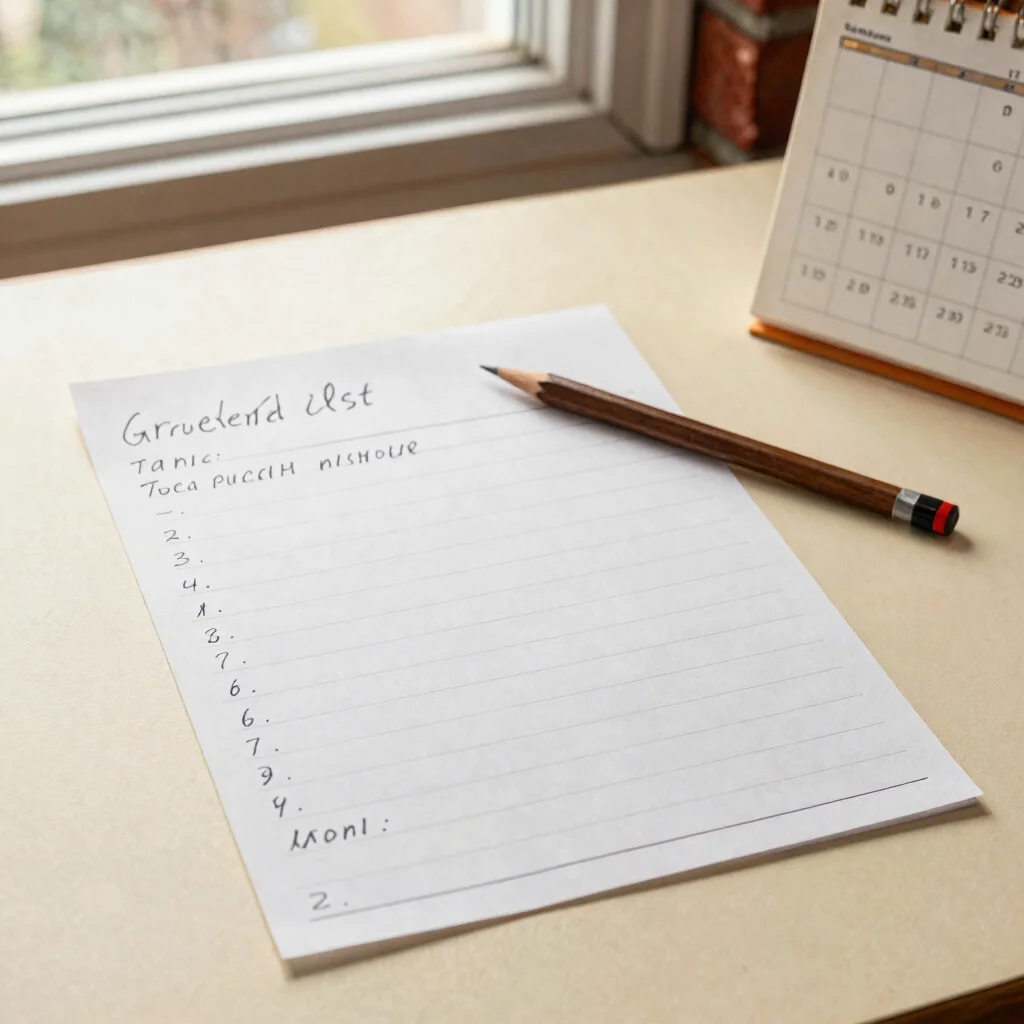
A folded grocery list can tell you what someone meant to make for supper, which errands came first, and what they remembered at the last minute. It is an unremarkable scrap of paper until you see the handwriting or recognize a familiar phrase. Everyday objects often hold the most approachable memories.
Small notes, real routines
Look for the paper people used to organize an ordinary day: a calendar marked in pencil, a note beside the telephone, or a reminder slipped into a book. These scraps show how a household kept track of plans before everything lived in a pocket-sized screen. They also capture habits that formal photographs rarely include.
Read the details gently
A list is not a complete account of the past, and one person’s routine cannot stand in for everyone’s. But familiar items, shorthand, and crossed-out errands can prompt useful questions: Who usually made the list? Where did the family shop? What happened when the day did not go to plan?
Keep a small record now
Try writing down a few details from a typical day: what you heard on the radio, what was cooking, or the errand you nearly forgot. Add a date and keep the note somewhere safe. Ordinary life is easy to overlook while it is happening, which is exactly why a small record can matter later.